

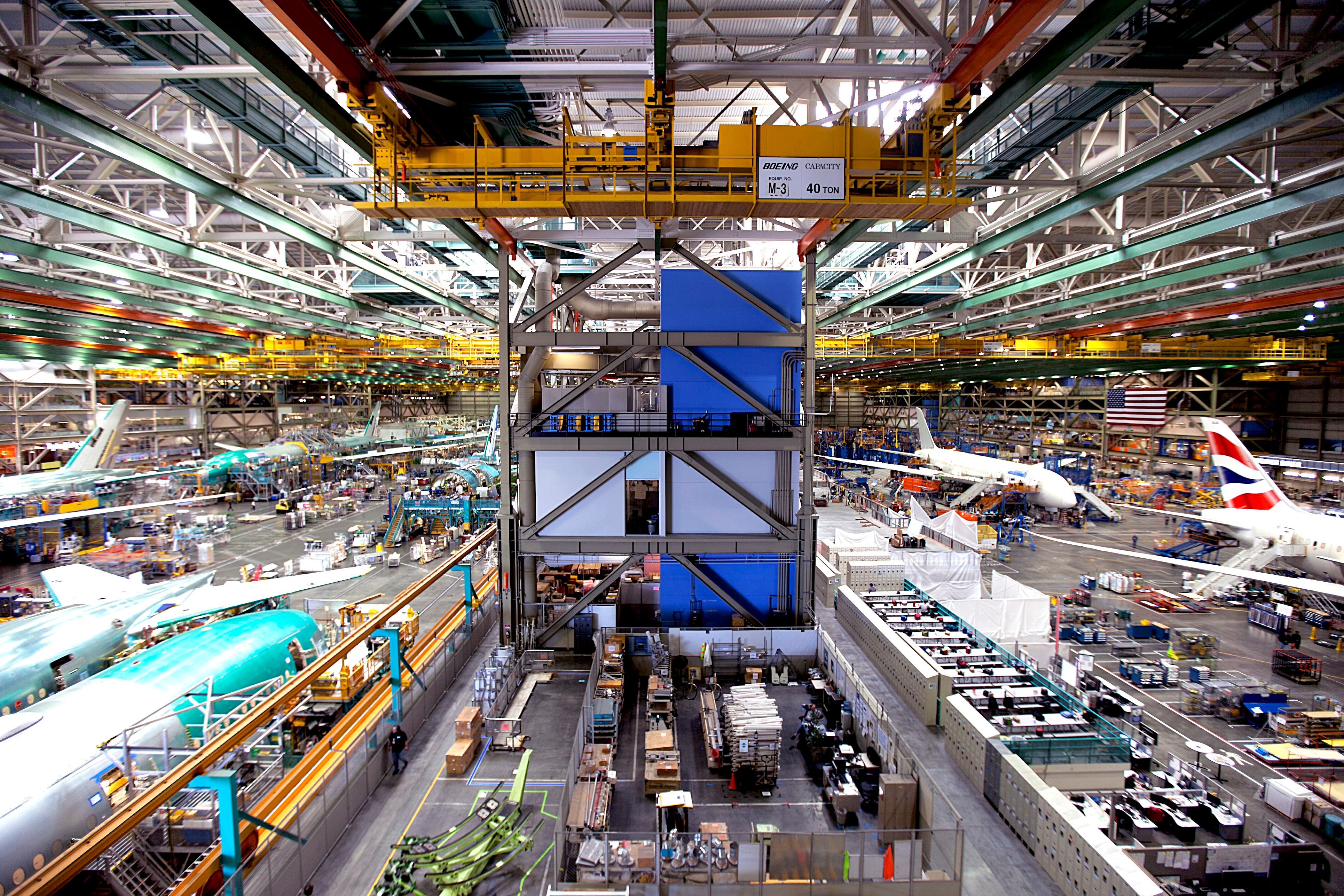
One trait superpowers possess that great powers lack is industrial swing production.
Swing production is defined as non-market oriented production that can be harnessed by the state.
This is usually arms, but it can also be capital goods.
The key point is that the capacity is banked. The component and composite stack is banked.
As Europe since 2022 has demonstrated, budgets do not equal production.

Composite pipelines have to be rebuilt one component at a time. It is much harder to rebuild this capability than it is to sustain it.
Look at how hard it is for Europe to restart the Taurus and scale the Storm Shadow lines.
Russia was able to allocate 3/4 of its total manufacturing to military production. It’s not enough that it allocated 7.5% of GDP. It needed an industrial sector that could absorb that. But not just that, it needed arms that output at a satisfactory PPP.
But not just that, it needed to produce enough of everything so the combined arms war system composite didn’t have component bottlenecks.
The USA presently allocates about 5% of its manufacturing to arms. It can scale pretty well, maybe adding 5% to 10% per year to total manufacturing if devoted. So 5% of $3 trillion is another $150 billion of arms.
As composite components scale, composite unit prices drop. So $150b/yr boost from the US is not linear, it’s exponential. 2 years of 5% gain, even requiring 3:1 ICOR is no problem for the USA. It can easily add $450b in industrial investment per year. Harder to spend +$150b/yr permanently.
But if the USA decides to scale, its output can easily surge to $450b/yr and its RUB/USD PPP can improve as component production scales.
+$600b in expenditure is 2% of GDP. In the scheme of things, very cheap. The US could easily scale over a decade at this speed and catch up to the Russians by 2030.
That is some serious swing production power. Just do the math and you can see.
Now look at China. It gets to skim off the $5 trillion in nominal component value its economy manufactures. These are cheap and in RMB. So Chinese scale always looks intimidating. Their prices aren’t just Chinese low, they are Chinese wholesale low.
So you might look at 10k Chinese missiles and decide you are still scared even though 20% will probably not launch. You won’t see how much logistics strain and opportunity cost and firing platform resource this all consumes.
You won’t see how much that reduces combat effectiveness in a non-linear manner, because when the missile must launch then failures are catastrophic. Combined arms warfare makes these failures terrible.
But if China is near its supply lines then it has plenty of resources to make up for failure and it can get enough mass to the battlefield for its mass to make up for quality errors. But the scale required is far bigger than standard calculations assume.
So all three have swing production. Europe does not. Even in an emergency, it can’t drop the price of a 155mm shell or get Storm Shadow missiles going or Leopard tanks scaling or Rheinmetall trucks scaling.
This requires not just industrial resources, but also financial resources. Importantly, it also involves seeing where the composite PPP ends up. The problem that Europe has with scaling is that it’s lacking the component chain needed to build composites to volumes required. Not only does it need to invest in the components, it needs to order enough for those lines to scale and improve their productivity. In the long run, they can integrate into the dual use component/composite market chain, but they first need to be built.
So letting manufacturing go too much loses the strategic capability, since it basically takes a strategic era to get the capability back to scale. We know this from how long it took Russia to modernize (2006-2026) which is incidentally the same amount of time as its decline (1986-2006).
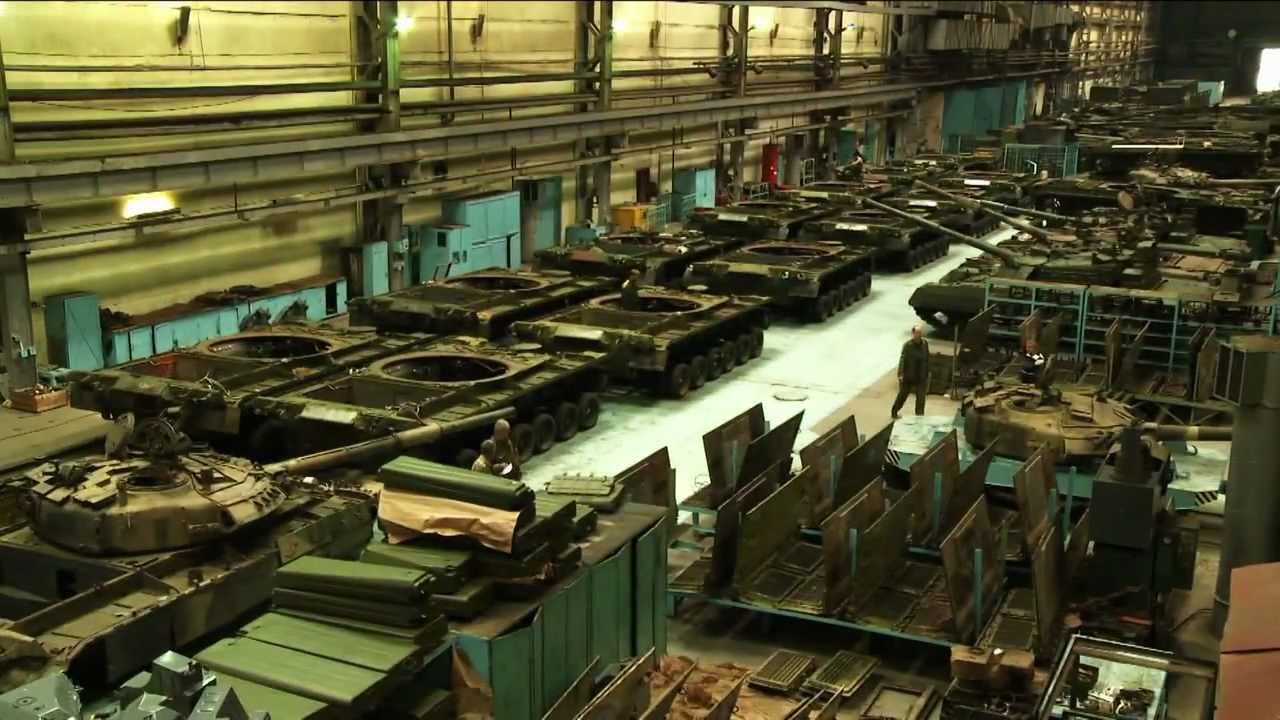
The USA can catch up in less than a strategic era. China can just build super cheap crap composites and try to keep up. Russia has actual scale so its military industry and dual use has scale-price advantages.
Japan lacks swing production because they over-borrowed. Korea is too small for its swing production to matter.
For a country like France, Germany, or the UK to actually get to a competitive level with USA/Russia/China, they would literally need at least a military-manufacturing complex the size of the USA’s, minimum.
We are seeing something like a 10:1 ICOR for European arms production. Over time this would improve as component infrastructure returns, but the initial outlays start at 10.
To then get to $225b/yr manufacturing would require $1.75 trillion in investments. Assume at the end, that the PPP per unit improves dramatically. But how many years to get there?
At $50b PPP base, it needs to scale 5 fold basically. Even if we assume a $3 trillion manufacturing base (which I think is way too generous), this means for a 2% gain of $60b, this is $600b + $60b of orders + $50b of existing orders, for $710b yr 1. $110b output
Year 2, $600b + $60b + $110b = $770b, $170b output
Year 3, $600b + $60b + $170b = $830b, $230b output
Year 4, $600b + $60b + $230b = $890b, $ 290b output
Total outlay = $3.2 trillion.
[Didn’t add that right earlier, so I just fixed it, but I don’t want you to be gaslit, I did change the figure]
Do you really think Europe is $3.2 trillion serious about its strategic weakness? Do you really think it’s +$240b/yr serious about its arms spending? When US ratios say that it’s going to need to spend DOUBLE its procurement for its total military spending?
Is Europe $410b/yr serious about fixing its weakness? And not to Russian standard, just to US standards?
And sure, after a few years at $290b output, the PPP value should SURGE and we could see output passively climb without more outlay. Probably to double, to $580b after another 4 years.
But this still would not catch up to present Russian capabilities. It would merely keep Europe from being so flimsy it can be destroyed with old conventional arms and Spetsnaz.
This is what I mean by the swing production. It’s related to the component chain. That is reflected in the PPP of the composites.
Korea and Japan are better off, but again, they can’t scale in a serious way. Their component shortage is labor, which is reflected in unit price and volume and it’s what drags down their military-industrial PPP.
Korea seems pretty good with a 2:1 ICOR, but it’s only got about $500b of manufacturing. To scale 5% gain, is about $25b for +$50b + $25b in arms procurement, + $25 b in military spending.
+$100b per +$25b arms manufacturing. That’s an expensive 5% of Korea’s GDP. Then a +2.5% in military spending. How far are you trying to take this? +5%? +$50b? Ok, so then it’s maybe about $80b to $100b of annualized production.
Breaks the bank to get to maybe half of US production. Needs to sell a lot of arms for that to work. If Japan does the same thing, maybe the two can be a military core...
... except they hate each other more than Europeans hate each other. So it’s hard to see them concentrating their power anywhere except to check China. Not the stuff of superpowers.
Let’s get to a fun one, India. India has many problems that are in the short term insurmountable. It’s very hard to justify starting with a 10:1 ICOR for arms investment to build up domestic production when it needs to scale to about $100b of arms output to start getting a good PPP per unit.
But India has an advanced country inside its poor country shell. If they could justify $1 trillion over 5 years, what could it get?
+$100b in arms production, forcing a $150b budget. That $150b budget would buy more per year as the component/composite pipeline scaled.
+$100b in advanced components could really be a game changer for India. But the problem is they’d be tempted to cheap out with everything. Then there’s no point. Then they spend a lot to have worse than China capabilities.
India would try to make it work with a 3:1 or 4:1 ICOR and that just won’t work given the low level of the local component system.
The swing production can only begin from an installed base at a critical mass.
Sure, once the advanced component chain is about $100 billion in value, the magic begins. But you need a few trillion to get there.
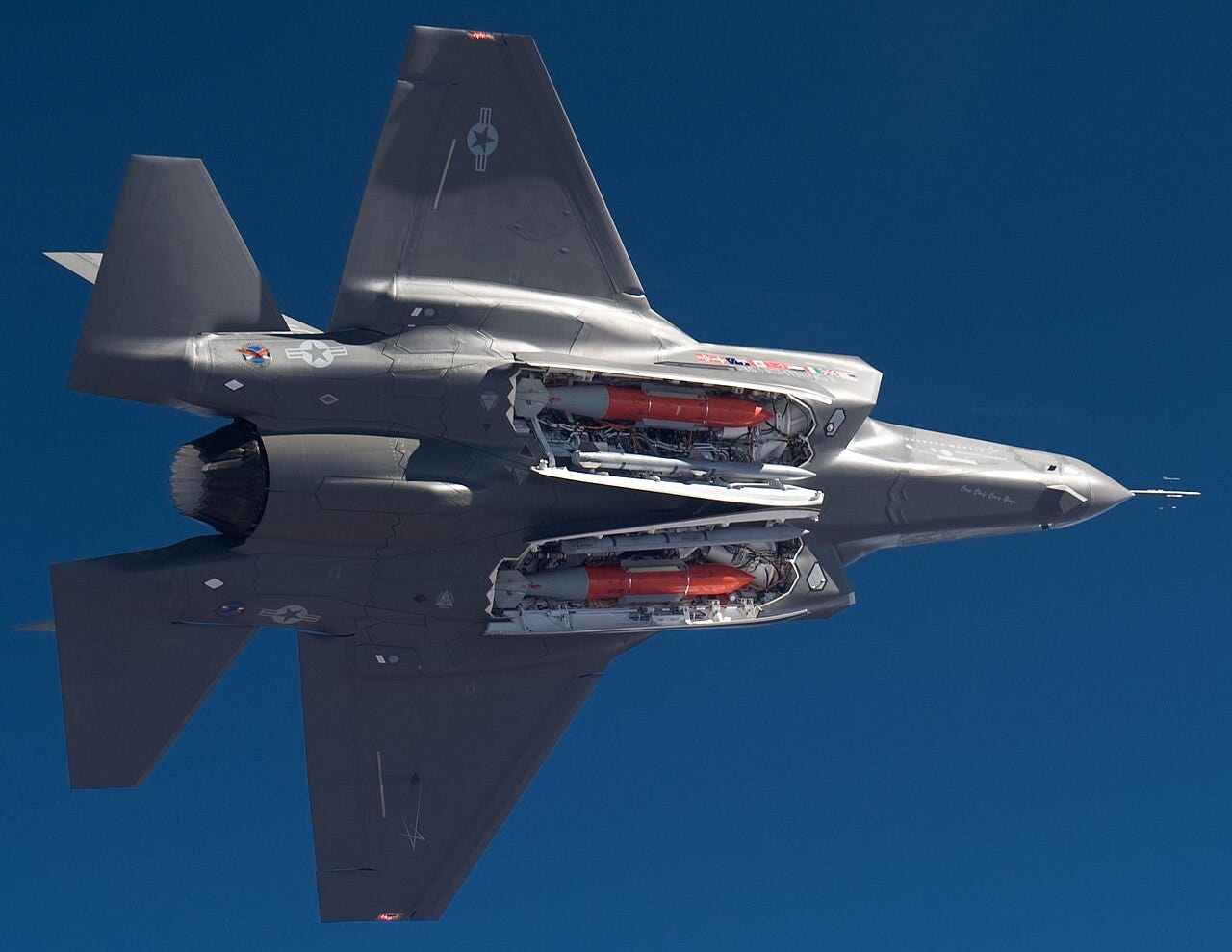
This is what the money jokers don’t understand. You can’t just money your way to components that work in a composite. The US spent $80b+ on the F-35 program. For ONE composite. China sure doesn’t have that discipline. Russia found the game so expensive it had to retire for 2 decades before it was able to find a new military industrial process that worked for it.
The less capacity you have, the more expensive the ICOR. You need a critical mass for it to be worth the investment. Europe just found out that you can’t money your way to swing production. It’s expensive. It requires buying enough composites for the component manufacturers to start integrating into other composites in your industrial chain.
And this is why Russia is set as superpower for the rest of the 21st century, barring some black swans. Because if Germany’s military spending in 1942 at $6 billion/yr was worth $600b today, then obviously they could have had a flatline alternate Nazi economy for a very long time with a relatively small population exerting superpower level military influence. We just don’t see it much anymore, even though it was really common to see small countries clobber bigger ones 150 years ago. Not because I think Man In The High Castle is admirable, but just to show you how long this sort of thing can go on if you can find the money to keep it rolling.
Russia has hyper-scaled arms. This is also why even if Russia’s industrial output doesn’t grow any more, over the next decade we still have to deal with a world where they will build 30k+ missiles, 15k+ tanks, 500k+ heavy trucks, 20 Tu-160s, 570 fighters, and who knows what else. But we know the money trends show if anything increasing Russian economic strength.
Russia Outspends The USA On Arms By 2 To 4 Times, But All You Want To Talk About Is The Missile Gap

Despite what you’ve read in the news, the real issue is not that the US is low on missiles.
Russia's $11 Trillion Dollar Economy

Since we already know the price of Russia commodity production in dollars, we can fit the PPP exchange rate until it fits the outputs.Thanks for reading Autodidact Obsessions! Subscribe for free to receive new posts and support my work.
If you think the US has materiel to spare in an attrition battle with Russia given our current budget projections, you are just not doing math.
If you think China can somehow magically overpower a Russia armed like that, you should cast more powerful Evola spells than that.
For those who were waiting for the post-WW2 strategic readjustment so we’d know trends for the next strategic era, you have it. USA, China, Russia. India can either evolve a parts chain or Stalin its way there. But unless it does something dramatic, it’s not going to join the superpowers for a long time. As for Europe, it needs will that it lacks. Its welfare state is already 4 trillion Euros a year. There was plenty of money. But they spent it all on jihad invaders and now it’s not clear if they could afford to industrialize now even if they got serious. Korea and Japan just don’t have the money or labor to generate the needed volume. Nobody else has anything close to enough money or industry to make it work. If anything, the fact that the regions that have the potential can’t achieve the capability says that the salient strategic event has already occurred—whatever its name, Ukraine, or World War 3. Even if we can’t agree on the name, we can agree on the consequences.